Siltframe Get a fix →

For teams building off-road robots and vehicles

See what your robot misses in dust, darkness and mud — before the field does.

We find where the camera AI of your off-road machine fails, find out why — and fix it with the right data.

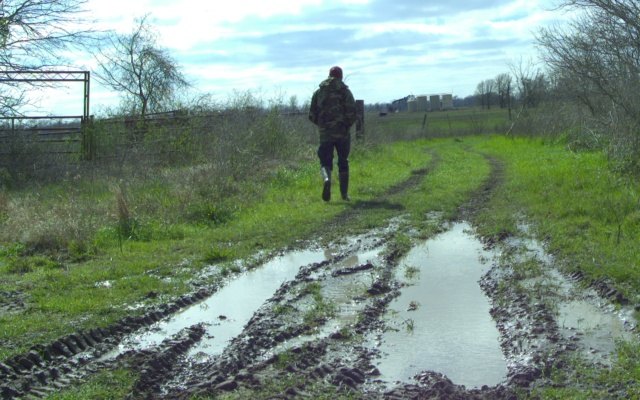
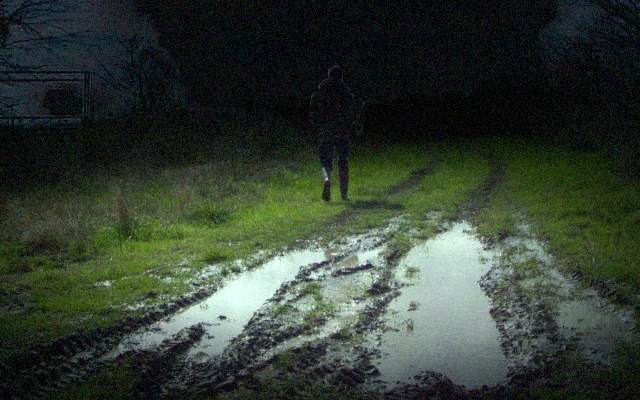
A real trail on a clear day The same trail at night
CLEAR DAY
NIGHT

Same AI, same trails

64%

worse at reading the scene at night, with only its headlights.

On this very frame it finds only 9% of the person on the trail — 93% on a clear day.

Averaged over 300 real trail frames. How we measure →

Built for

  • Farm robots
  • Mining & quarry trucks
  • Construction machines
  • Forestry
  • Defence & rescue
  • Off-road delivery

From “it fails in the field” to a fixed model

  1. 1

    Test

    We put your model through dust, night, fog, rain and mud — three strengths each, every pixel still correctly labelled.

  2. 2

    Find why

    Not just a score: which objects it loses, in which conditions, and what in its training data causes it.

  3. 3

    Fix with the right data

    Real data for the gaps it has never seen, simulation only where the real thing can’t be captured — then retraining.

  4. 4

    Prove it

    Before and after on your own real frames, against a control run — so you see the gain that survives the field.

Watch the demo · 40 seconds

One real trail, one real AI, five kinds of bad weather.

Every number in the video is the AI’s actual output. Frames: GOOSE dataset, Fraunhofer IOSB (CC BY-SA 4.0).

What a fix looks like · a real case

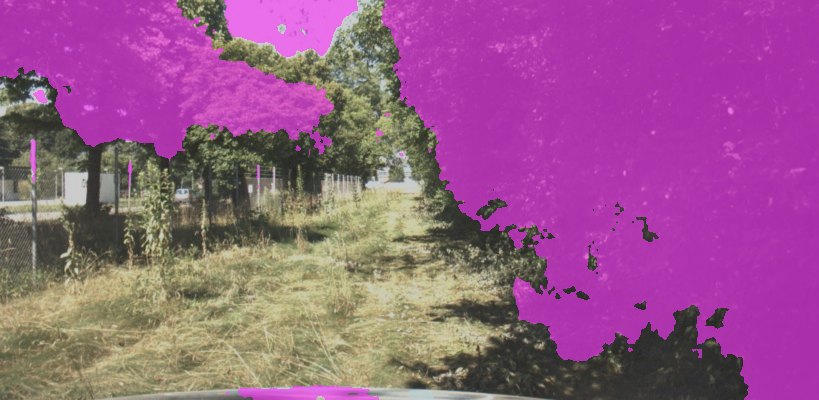
The AI thought the trees were sky.

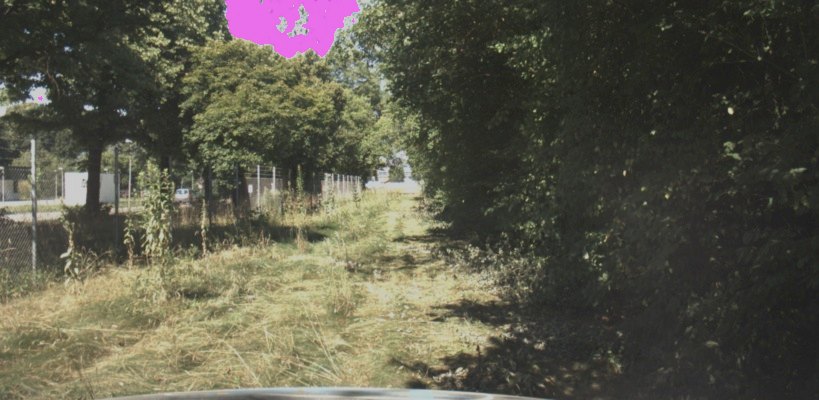
A model trained on open fields — and trained with plenty of simulated bad weather — called 80% of the tree canopy on this forest road “sky”. Simulated weather didn’t fix that. What fixed it was the kind of real data it had never seen: roads under trees. Same frame afterwards: 0%.

  1. Test: good in clear weather, poor in real rain, fog and low light.
  2. Why: it had only seen open fields — roads under trees were missing.
  3. Fix: 1,500 commercially licensed real frames with forest roads, matched to its classes.
  4. Proof: on real bad-weather frames it had never seen, scene reading improved by 26–35 points on all 4 AI models we tried.

Read the full story →

Before: large parts of the tree canopy marked as sky
Before · magenta = “sky”
After: the canopy is recognised as trees
After · with the missing data

Plans

Start with $19. Go as deep as you need.

Individual

$19one-time

Students, researchers, solo builders

Test your model yourself.

  • Stress-test pack: 2,460 labelled off-road images — dust, night, fog, rain and mud on the lens, 3 strengths each, plus real rain and snow
  • Scoring script: your failure map in about 10 minutes
  • Reference results from 3 AI models to compare against
  • + 2 more
Get the pack — $19 →

Team

from $300per audit

Startups and small robotics teams

We find where and why your model fails.

  • Everything in Individual
  • Your model tested on your own frames (up to 300)
  • All 5 conditions × 3 strengths, cross-checked with independent simulators
  • + 3 more
Book an audit →

Recommended

Pro

from $600per model

Teams shipping a product

We find it — and fix it.

  • Everything in Team
  • Gap data: commercially licensed real data that covers what your model never saw, mapped to your classes
  • Simulated hard cases on your own frames — only where real data doesn’t exist
  • + 3 more
Get a fix →

Enterprise

Custom

Fleets, several models or cameras

Robustness as part of every release.

  • Everything in Pro
  • Several models, cameras or operating sites
  • Regression testing on every model release
  • + 3 more
Talk to us →

No hidden costs: every audit ends with a fixed price for the fix, before you commit. Compare plans →

Questions

Isn’t this just adding fake weather to our data?

No. Simulated weather is one tool, and we measure it honestly: in our own tests it helps against simulated conditions, but on real bad weather the big gains came from the right real data. So we test first, find out what your model is missing, and use whichever fix actually moves your real-world numbers.

Do I have to send you my model?

No. With the $19 stress-test pack you run everything yourself — nothing leaves your machine. For an audit we can work either way: you send the model, or we send you the test set and a script and you send back the results. An NDA is available before anything is shared.

We don’t have much labelled data. Can you still help?

Yes. A few photos of where your vehicle works are enough to start. Often the fastest win is openly licensed real data that already covers what you’re missing — we find it and map it to your classes.

Is the bad weather real?

The dust, night, fog, rain and mud are simulated with physics-based models on real photos, so every pixel keeps its correct label. The pack also includes 60 frames of real rain and snow, and we always check findings on real frames — our own biggest finding came from exactly that.

What does it cost?

Individual: $19 for the stress-test pack. Team: audits from $300. Pro: audit + fix from $600 per model. Enterprise: custom. The fix is always priced before you commit.

What do I actually get back?

From an audit: a failure map — how much worse your model reads the scene in each condition, which objects it loses first, and why. From a fix: a new version of your own model that handles those conditions better, the data that taught it, and a before/after report on your own real frames.
New results a few times a year.

No drip campaign. One email when something new is measured.

Get in touch

Goes straight to [email protected]. We read everything and reply ourselves.